
How to Tell If Your Business Idea Is a Business… or Just a Thought
Updated: Apr 9
Stage 1: Idea & Contemplation (Before the Leap)

Every day, people come up with ideas they believe could become a business. Some of those ideas have real potential. Others sound good in theory, but never become something people are actually willing to pay for.
That is the difference between a business idea and a passing thought.
An idea becomes more than a thought when there is evidence that other people see value in it. Excitement is not enough. Confidence is not enough. Even skill is not enough. A business begins to take shape when there is proof that a real customer exists and that the offer solves a problem in a way people are willing to pay for.
One of the best ways to evaluate an idea is to ask a few direct questions.
Ask Questions!
First, is there a real problem behind the idea? Good businesses are usually built around something practical. They save time, reduce stress, improve results, create convenience, or solve an ongoing frustration. If the idea does not clearly solve a problem, it may be harder to build demand around it.
Second, are people already paying for something similar? This is one of the strongest signs that an idea may have business potential. Competition is not always a bad thing. In many cases, competition is proof that customers already exist. If people are already paying for similar services or products, that means the market may already be there.
Third, can the idea be explained clearly and simply? If it takes too long to explain what the business does, who it helps, or why someone would buy it, that can be a warning sign. Strong business ideas are often easy to understand. Clarity matters because customers usually do not spend money on confusion.
Fourth, would someone realistically pay for this now? Not after months of polishing. Not after building a perfect website. Not after endless planning. The question is whether someone would see value in the offer today. If the answer is yes, that is worth paying attention to.
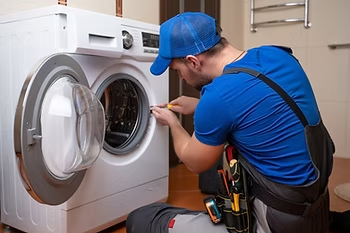
Fifth, can the idea be tested without a major investment? A business idea becomes stronger when it can be tested in a simple way. That might mean offering the service to a few people, creating a basic version of the offer, or having real conversations with potential customers. Testing helps separate assumptions from reality.
A thought stays in the imagination. A business starts moving when it is tested, clarified, and validated.
That does not mean every idea needs to be perfect before moving forward. It means an idea should be examined honestly. Some ideas are strong enough to build on. Others need refinement before they are worth major time or money.
The goal is not to talk yourself out of starting. The goal is to make sure what you are building has a real foundation.
Knowing how to evaluate an idea is an important step, but evaluation alone is not enough. Once an idea begins to show real potential, the next question becomes just as important: what should you do before spending money on branding, tools, subscriptions, or setup? In the next article, we will look at what founders should do before investing a single dollar into a business idea, and how a little validation early can prevent costly mistakes later.
At BASE – Business Assistance for Small Enterprises, we help entrepreneurs evaluate ideas with more clarity so they can make practical decisions before investing too much time, money, or energy in the wrong direction.
Article #2 in the series "From the Base Up"


Comments